
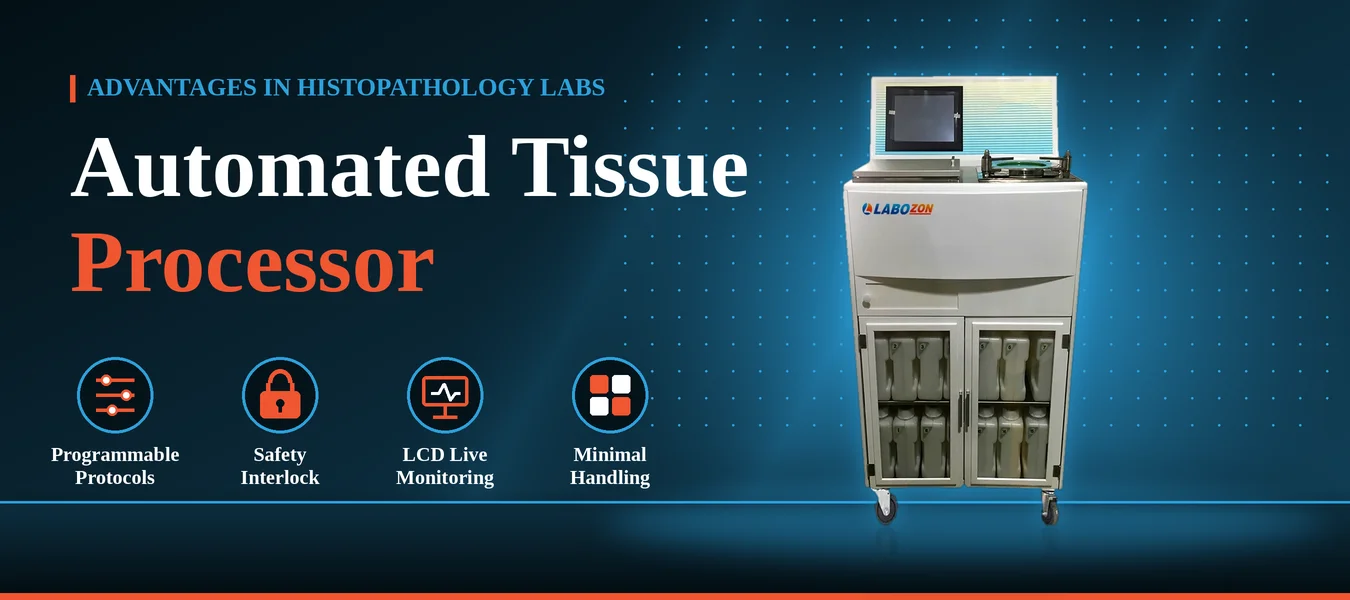
A practical guide to how programmed tissue processing supports consistent slides, from working principles and use cases to equipment selection and daily habits.
Working principlesUse casesSelection guidanceThe Bench Problem Behind Manual Processing
Tissue preparation is a chain of timed steps. Each specimen must be fixed, dehydrated, cleared, and infiltrated with paraffin wax before a microtome can cut thin sections. When technicians carry baskets from one container to the next, timing drifts, spills become possible, and skilled staff stay tied to the bench for long stretches.
An automated tissue processor replaces those hand transfers with a programmed cycle. For small pathology labs especially, a histology tissue processor that follows stored programs gives the workflow a steady rhythm and frees the team for grossing, embedding, and sectioning.
How Tissue Processing Works
Each stage prepares the tissue for the next one. Fixation preserves structure, dehydration removes water, clearing swaps the dehydrating fluid for one that mixes with wax, and paraffin infiltration fills the tissue so it can be cut cleanly. An automatic tissue processing machine runs these stages in order, moving fluids in and out around the loaded cassettes on a set schedule.
Automated tissue processor diagram: the path of a specimen through one cycle.
Because the sequence is fixed in a program, an automated tissue processor machine treats each batch the same way. That repeatability is the basis for consistent section quality.
What Processing Quality Means for Slides
Quality shows up later at the microtome. Tissue that is not fully infiltrated can crumble or tear when sectioned, while tissue held too long in harsh fluids can turn brittle. Even, repeatable timing keeps tissue between those two extremes, and clean sections give the pathologist a clearer view of cell detail.
Wax condition matters as well. Clean, fully melted paraffin infiltrates evenly, which is why wax handling features deserve as much attention as capacity when reviewing an instrument.
Manual Handling and Automated Processing, Side by Side
The table below shows where an automated histology processor changes the daily routine, and where an automated tissue processor gives the team room to work on other tasks.
| Aspect | Manual handling | Automated processing |
|---|---|---|
| Timing | Depends on staff attention during a busy shift | Follows the stored program |
| Fluid transfer | Baskets are carried between containers | Automatic fluid exchange moves reagents |
| Consistency | May vary from one operator to another | Same program and same path for each batch |
| Staff time | Tied to the bench for the whole run | Available for other tasks during the cycle |
| Visibility | Checked by eye at intervals | Status shown on a display, with alarm support |
| Growth | More specimens call for more hands | Larger baskets absorb rising sample counts |
None of this removes the need for skilled review. It moves technician time toward tasks that call for judgment.
Practical Use Cases Across Laboratories
Automated tissue processor uses span hospital pathology departments, research centers, and advanced laboratories that prepare tissue for microscopic study. Medical, clinical, and research teams rely on a program-driven workflow to streamline fixation, dehydration, clearing, and paraffin embedding while supporting high-throughput sample processing.
Hospital pathology
Routine specimens move through a scheduled cycle, so tissue is ready for embedding and diagnostic review on a predictable timeline.
Research centers
Study samples follow the same protocol across a project, which keeps tissue condition comparable from one batch to the next.
Advanced laboratories
Programmable steps let different tissue types follow suitable protocols without rebuilding the routine by hand.
Small pathology labs
An enclosed unit suits lean teams and growing sample counts, where technician time is the scarcest resource.
A Closer Look at the Automated Tissue Processor LZ-ATP-B100
The Automated Tissue Processor LZ-ATP-B100 is an enclosed type instrument used mainly in small laboratories. It supports tissue fixation, dehydration, clearing, and embedding in paraffin wax, with programmable protocols and minimal hands-on intervention.
The details below show how those capabilities are organized on the unit.
Ten programs
Built around nine reagent steps and three paraffin wax steps.
Basket capacity
The basket holds up to one hundred twenty cassettes.
Fluid and wax handling
Three paraffin wax tanks, ten reagent bottles, and two cleaning fluid bottles, with automatic fluid exchange and oven degassing paraffin cleansing.
Live monitoring
An LCD crystal display shows working status in real time.
Protective features
A safety interlock device, an alarm, and a multiple sample protection system.
Operating range
Rooms between fifteen and thirty-five degrees Celsius, with relative humidity from ten to eighty percent, non-condensing.
Common Selection Mistakes to Avoid
Instruments in the tissue processor range differ in more ways than capacity. When laboratories review tissue processing equipment, a few oversights come up again and again:
Choosing on capacity alone
Program count, wax tank count, and reagent bottle count shape daily flow just as much as the number of cassettes per run.
Overlooking program flexibility
A fixed routine suits uniform specimens, but mixed tissue types need steps that can be arranged to fit.
Skipping the safety review
Interlocks, alarms, and sample protection matter most once the instrument runs while staff work elsewhere.
Ignoring the installation site
Bench space, room conditions, and the available power supply should be confirmed before the unit arrives.
Forgetting the rest of the workflow
Embedding, wax storage, and sectioning must keep pace with processing, or the gain at one step is lost at the next.
Operating Habits That Support Steady Results
Good habits keep an automated tissue processor producing even tissue from one batch to the next. These practical tips come from the instrument specifications:
- Load cassettes evenly and stay within basket capacity so reagents reach all tissue.
- Match the program to tissue type and thickness before starting a run.
- Let the paraffin melt fully ahead of time, since the wax tanks need about three hours to melt.
- Label reagent bottles clearly and replace them on a fixed schedule.
- Watch the display during the opening minutes, because fill and drain take about five minutes.
- Keep the safety interlock device in use and never bypass it.
- Use the cleaning fluid bottles as the manual describes.
- Confirm that the power supply matches the unit rating of two hundred twenty volts at sixty hertz before installation.
- Keep a short log of programs, reagent changes, and wax changes for each batch.
Exploring the Wider Tissue Processor Category
The tissue processor category brings together instruments that prepare fixed tissue for embedding. On the Labozon site it includes automated tissue processors, such as the LZ-ATP-B100 and related models, alongside double basket tissue processors. Laboratories reviewing options usually weigh cassette capacity, program count, safety features, reagent and wax capacity, and the space the instrument needs. You can explore the full range in the tissue processor category.
Laboratories that also need supporting equipment for embedding, sectioning, and staining can start from the Labozon home page, which lists the wider laboratory equipment range.
Name: Olivia Carter – Labozon
Specialty: Laboratory Equipment, Scientific Technology, and SEO Content Writing
Writing Style: Professional, informative, research-driven, and reader-friendly.
Bio: Olivia Carter is a content writer at Labozon, specializing in laboratory equipment, scientific technologies, and laboratory applications. She creates informative, SEO-focused blog articles that highlight product features, explain key benefits, and explore the practical uses of scientific instruments. Her goal is to present technical information in a clear, accurate, and accessible manner, helping laboratory professionals, researchers, and science enthusiasts make informed decisions.
See the complete details for this enclosed, programmable instrument.
Explore Automated Tissue Processor LZ-ATP-B100Related Products
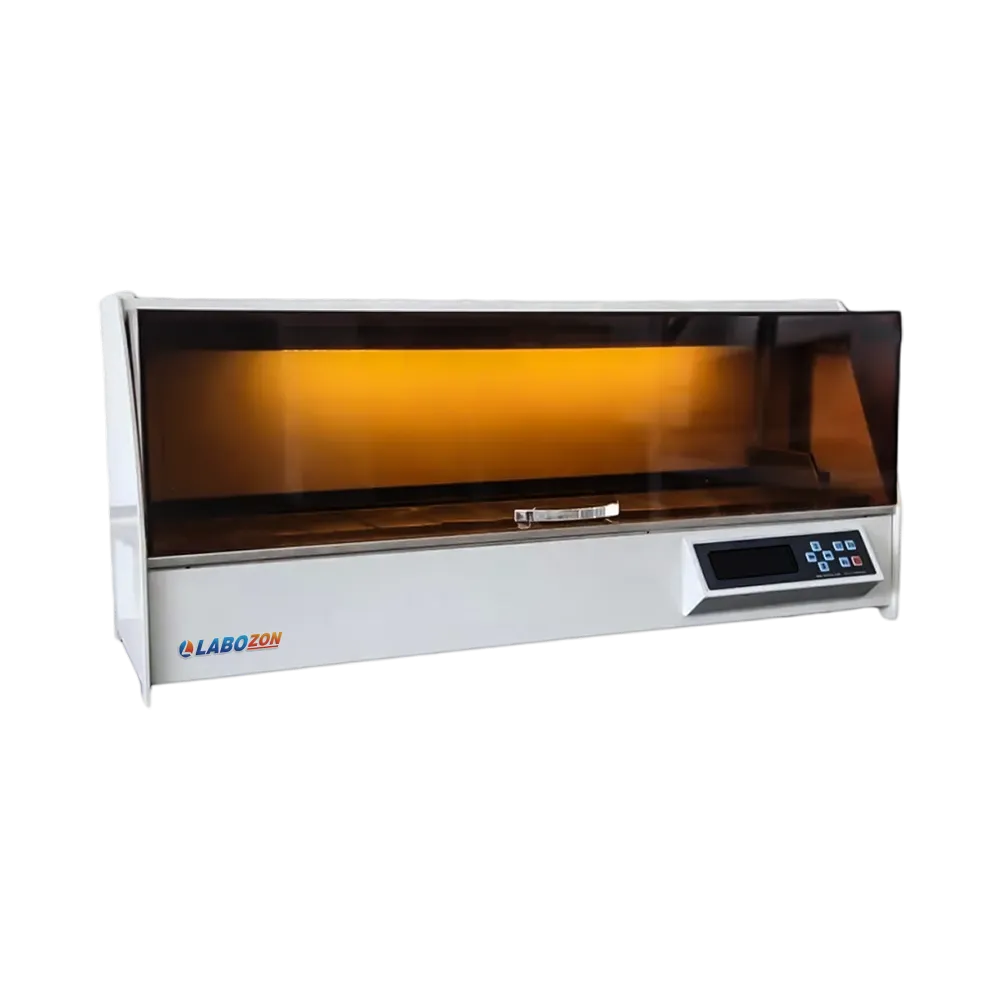


Looking for automated tissue processor?
Compare available models, review product specifications, and contact the Labozon team for assistance in identifying equipment that matches your laboratory requirements.