
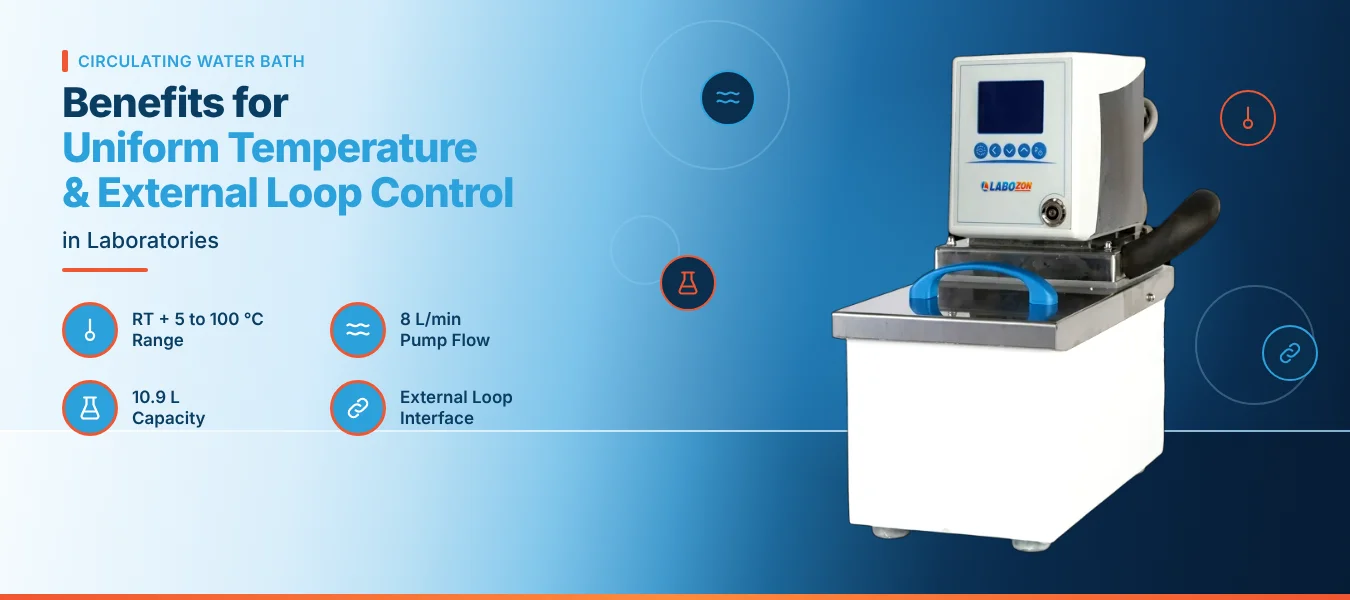
A static tank warms samples unevenly, with hotter water near the heater and cooler water near the walls. A circulating water bath removes that gap by keeping the liquid moving. This guide explains how it works, where hospital, research and advanced laboratories apply it, and what to review in the Labozon Circulating Bath LZ-CB-A100.
How Liquid Movement Spreads Heat
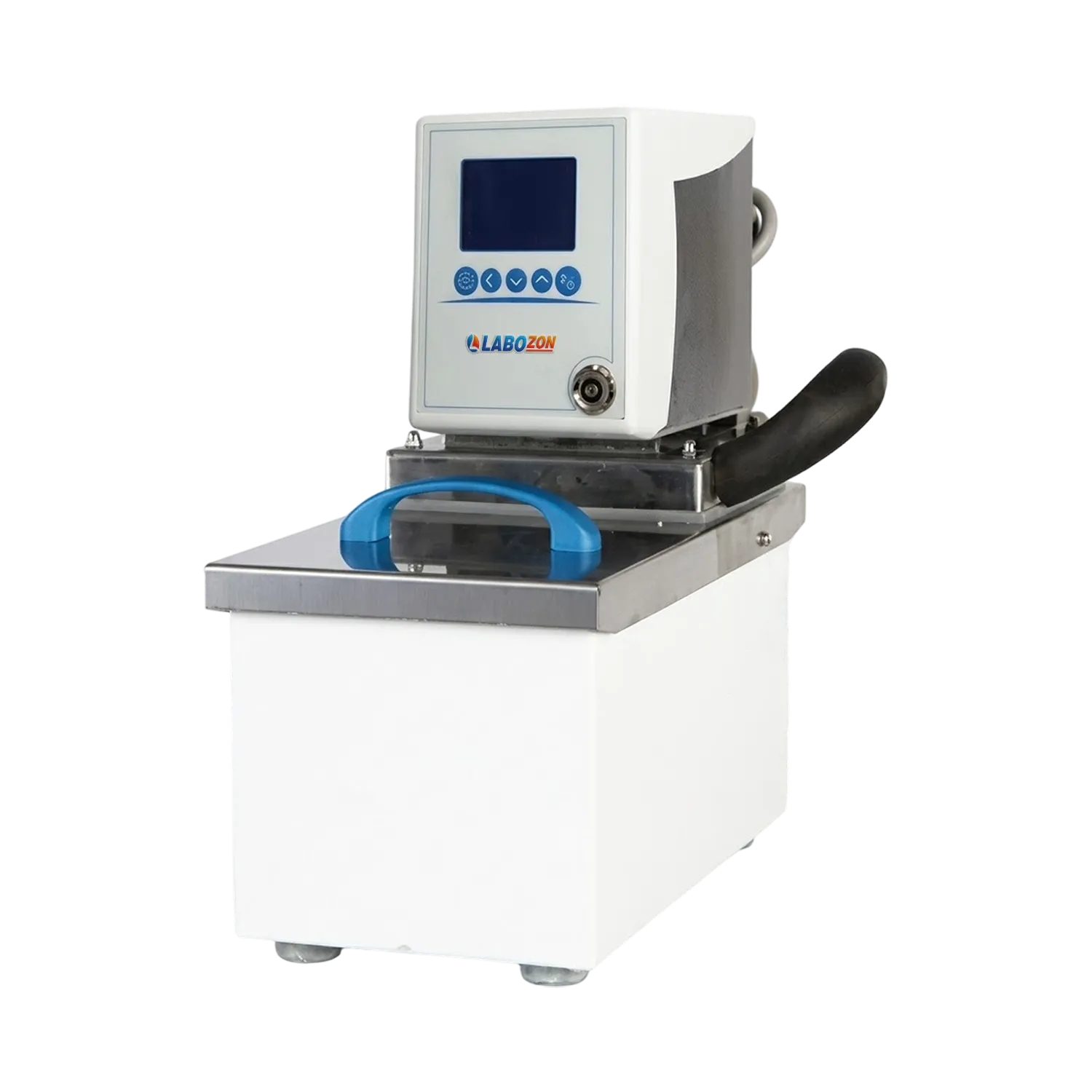
A circulating water bath laboratory instrument joins a heated tank, a pump and a microprocessor controller. The sensor reports temperature, the controller switches the heater, and the pump moves liquid past the heater and back into the tank.
This constant movement reduces temperature gradients, so samples placed in different positions experience more consistent thermal conditions. A circulator bath with an external connection adds a second path that sends the same liquid to an outside vessel and back.
Where Laboratories Apply Steady Heating
Circulating water bath uses reach across hospital, research and industrial work because many procedures need a stable thermal environment rather than a single hot spot.
Incubation
Warming samples for biological studies.
Preparation
Reagent and buffer conditioning.
Reactions
Jacketed vessels and small reactors.
Conditioning
Process fluids and sample cells.
The use of circulating water bath equipment grows when several vessels need the same temperature, because the tank and the external loop work from one setpoint.
Working With an External Loop
External loop control lets the bath temper equipment that cannot sit inside the tank, such as a jacketed reaction vessel or a sample cell. The pump sends liquid through tubing to the outside vessel and returns it to the tank.
The outside vessel can be maintained at a temperature close to the bath setpoint, depending on insulation, tubing length, flow conditions and vessel heat load. Short, insulated tubing and secure clamps keep that gap small and prevent leaks during long runs.
The Labozon unit lists an external water bath interface and an 8 L/min pump, which allows loop work with outside vessels. Confirm loop volume and tubing needs with Labozon before connecting larger vessels.
Key Details of the LZ-CB-A100
The Circulating Bath LZ-CB-A100 lists the following published details.
| Feature | Specification |
|---|---|
| Type | Constant temperature bath |
| Capacity | 10.9 L |
| Pump flow | 8 L/min |
| Temperature range | RT + 5 to 100 °C |
| Temperature control precision | ±0.1 |
| Ambient temperature | +5 to 35 °C |
| Liquid media | Pure water; mineral oil above 80 °C; antifreeze-compatible medium for applications below 5 °C, following the manufacturer's instructions |
| Interface | External |
| Alarms | Abnormal temperature and low water level |
| Gross weight | 8 kg |
Circulator Bath and Static Tank Compared
The table sets the two common approaches side by side using typical features.
| Factor | Static Tank | Circulator Bath |
|---|---|---|
| Temperature spread | Gradients form near heater and walls | Reduced by constant flow |
| Sample position | Results can depend on location | More consistent conditions throughout |
| Outside vessels | Not supported | Possible through an external loop |
| Recovery after loading | Slower in many cases | Can return to setpoint sooner |
Selection Mistakes That Cause Rework
- Choosing on tank volume alone and ignoring pump flow and the external connection.
- Expecting sub-ambient setpoints from a heating-only bath, when a refrigerated circulating bath is the better match for low-temperature steps.
- Overlooking the permitted liquid media for high or low temperature work.
- Ignoring room temperature, which affects how steadily the setpoint is held.
- Skipping tubing length and insulation planning before connecting an outside vessel.
Teams reviewing options can browse the bath and circulator category to match range, capacity and flow to the task before shortlisting.
User Tips and Recommended Practices
- Fill the bath to the marked level before switching on the heater.
- Use pure water for general work, and choose mineral oil or antifreeze only within the media ranges listed.
- Preheat the bath to the setpoint before loading samples.
- Place samples away from the heater and keep them below the liquid level.
- Insulate external loop tubing and check clamps before each run.
- Keep the room within the listed ambient range.
- Drain and clean the tank on a regular schedule to limit scale and residue.
- Record setpoint and run time for each test to keep results traceable.
Exploring the Wider Bath and Circulator Range
The LZ-CB-A100 belongs to the bath and circulator group, which covers water baths, oil baths, heating circulators and cooling circulators. Buyers usually compare temperature range, working capacity, pump flow, external connections, controller type, alarm functions and whether cooling is needed for sub-ambient work.
The full range of baths and circulators shows these instruments together, and the Labozon home page opens the other laboratory equipment groups.
See the full specification of the Circulating Bath LZ-CB-A100.
Explore Circulating BathRelated Products
Looking for circulating water bath?
Compare available models, review product specifications, and contact the Labozon team for assistance in identifying equipment that matches your laboratory requirements.