
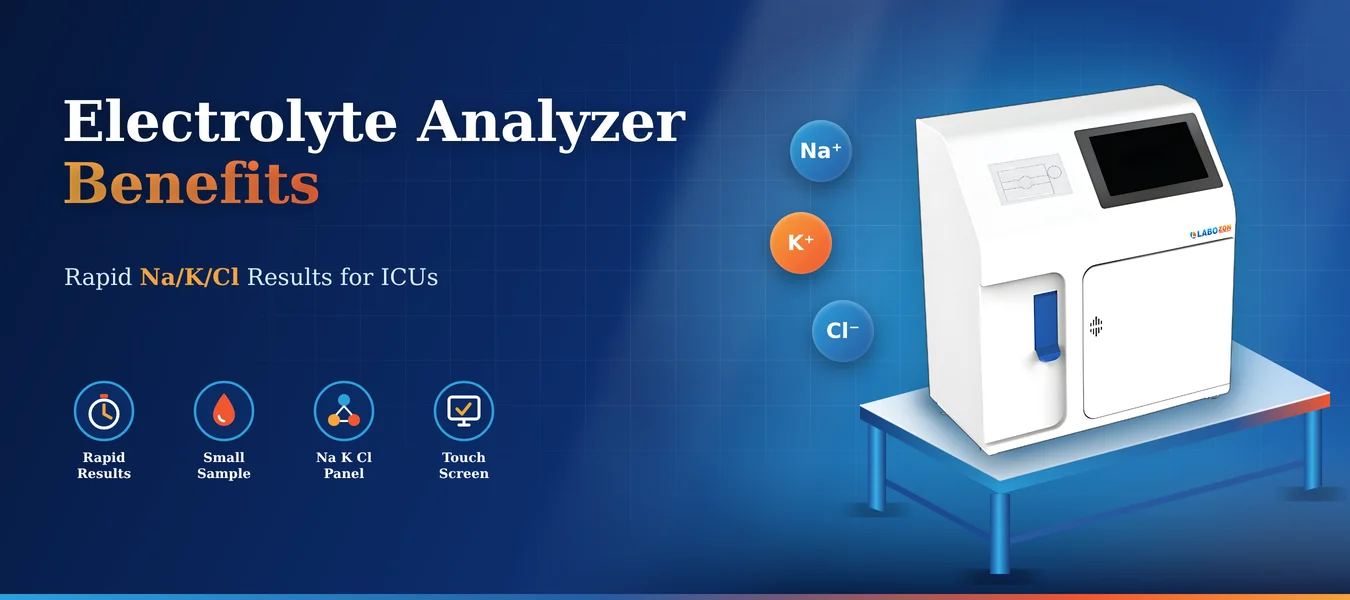
In an intensive care unit, sodium, potassium, and chloride readings guide decisions about fluids, medication, and monitoring. A well-matched electrolyte analyzer lets the laboratory return those readings quickly and consistently. The Electrolyte Analyzer LZ-EA-A100 is a semi-automated, microprocessor controlled system that reports patient results in up to twenty-five seconds. This article explains how the technology works, where it fits in clinical and research workflows, which selection mistakes to avoid, and how to keep daily operation consistent.
How Ion Selective Measurement Works
The LZ-EA-A100 is built on ion selective electrode technology. An ion selective electrode responds to one specific ion, and the electrical potential it produces is used to determine how much of that ion is present in the sample. Sodium, potassium, and chloride are each read by their own electrode, which is why a single electrolyte analyzer can report all three from one small sample.
Supportive software adds automatic potential tracking correction, so the instrument follows small changes in electrode response instead of leaving them unchecked. The sequence below shows the path a sample takes from loading to a recorded result.
Why Fast Panels Matter in Critical Care
Sodium, potassium, and chloride influence fluid balance, nerve signaling, and heart rhythm. Patients in intensive care can change quickly, so care teams often request an electrolyte panel more than once during a stay. A blood electrolyte analyzer that matches the pace of the unit shortens the gap between a sample reaching the bench and a clinician seeing the values.
A compact electrolyte panel machine placed close to the workflow also reduces handling steps. Fewer steps mean fewer chances for labeling slips or delays, which is a quiet but real benefit of keeping measurement near the point where decisions are made.
Practical Use Cases Across Laboratories
The clinical electrolyte analyzer category covers more than one department. Common electrolyte analyzer uses in healthcare are patient sample testing, disease diagnosis, and health monitoring. The LZ-EA-A100 accepts whole blood, serum, plasma, cerebrospinal fluid, and dilute urine, so one electrolyte analyzer machine can support several sample types in the same laboratory.
Outside the hospital, the same measurement approach appears in other settings:
- Pharmaceutical laboratories: electrolyte balance testing and IV fluid quality control.
- Veterinary diagnostics: animal blood analysis and livestock health monitoring.
- Food and beverage laboratories: mineral content, salt content, and fermentation monitoring.
- Biotechnology and research laboratories: ionic balance evaluation and cell culture media analysis.
Teams that run several test types often compare this instrument with other laboratory analyzers before deciding how to arrange their bench space.
Features That Support Busy Shifts
Touch Interface
A seven inch color touch screen shows comprehensive parameters in a compact unit.
Low Sample Volume
Sixty to one hundred fifty microliters are enough, which helps when material is limited.
Bubble Monitoring
Tiny air bubbles are monitored automatically to protect measurement accuracy.
Flushing Cycles
Wave flushing and pipeline flushing help avoid cross contamination between samples.
Data Memory
Up to fifty thousand results can be stored, with power off protection for the data.
Fault Alarm
An automatic fault alarm with elimination alerts staff when attention is needed.
Selection Mistakes Worth Avoiding
Comparing Electrolyte Testing Equipment
When laboratories review electrolyte analyzer manufacturers and models, a side by side view of core specifications keeps the discussion concrete. The table lists what to ask and what the LZ-EA-A100 provides.
| Point to Compare | What to Ask | LZ-EA-A100 |
|---|---|---|
| Measured ions | Are all needed ions covered? | Sodium, potassium, chloride |
| Technology | How is the ion read? | Ion selective electrode |
| Sample volume | How much material is required? | Sixty to one hundred fifty microliters |
| Reporting time | How soon is a value shown? | Up to twenty-five seconds |
| Calibration | Which modes are offered? | Automatic and manual |
| Records | Where do results go? | Built-in thermal printer, fifty thousand result memory, RS232 for LIS |
| Operating range | What room and power are needed? | Ten to forty degrees Celsius, humidity at or below eighty percent, one hundred to two hundred forty volts |
Understanding the Laboratory Analyzers Category
The LZ-EA-A100 belongs to a wider family of instruments that read specific properties of liquid samples. Alongside electrolyte measurement, Labozon presents related analyzers for blood gas analysis, total carbon measurement in water, and coagulation testing. Laboratories exploring this family usually compare which parameters each instrument reports, which sample types it accepts, how much bench space it needs, and how its results connect to existing records.
To browse the full range, visit the Labozon laboratory analyzers category. Broader equipment families from Labozon Scientific Inc., a USA based manufacturer of laboratory equipment, are organized on the Labozon home page, which helps teams planning a wider laboratory setup.
Daily Operation Guidelines
- Keep the instrument within its stated temperature and humidity range.
- Run automatic calibration routinely, and use manual calibration when a check is needed.
- Load samples carefully and avoid drawing air, even though bubbles are monitored.
- Allow wave flushing and pipeline flushing to finish between samples.
- Confirm patient labels before printing or sending results to the LIS.
- Respond to the fault alarm promptly and follow the instrument manual for any maintenance step.
Following these habits keeps each result tied to the right sample and helps the instrument stay steady through long shifts.
Name: Olivia Carter – Labozon
Specialty: Laboratory Equipment, Scientific Technology, and SEO Content Writing
Writing Style: Professional, informative, research-driven, and reader-friendly.
Bio: Olivia Carter is a content writer at Labozon, specializing in laboratory equipment, scientific technologies, and laboratory applications. She creates informative, SEO-focused blog articles that highlight product features, explain key benefits, and explore the practical uses of scientific instruments. Her goal is to present technical information in a clear, accurate, and accessible manner, helping laboratory professionals, researchers, and science enthusiasts make informed decisions.
Related Products

Looking for Electrolyte analyzer?
Compare available models, review product specifications, and contact the Labozon team for assistance in identifying equipment that matches your laboratory requirements.