
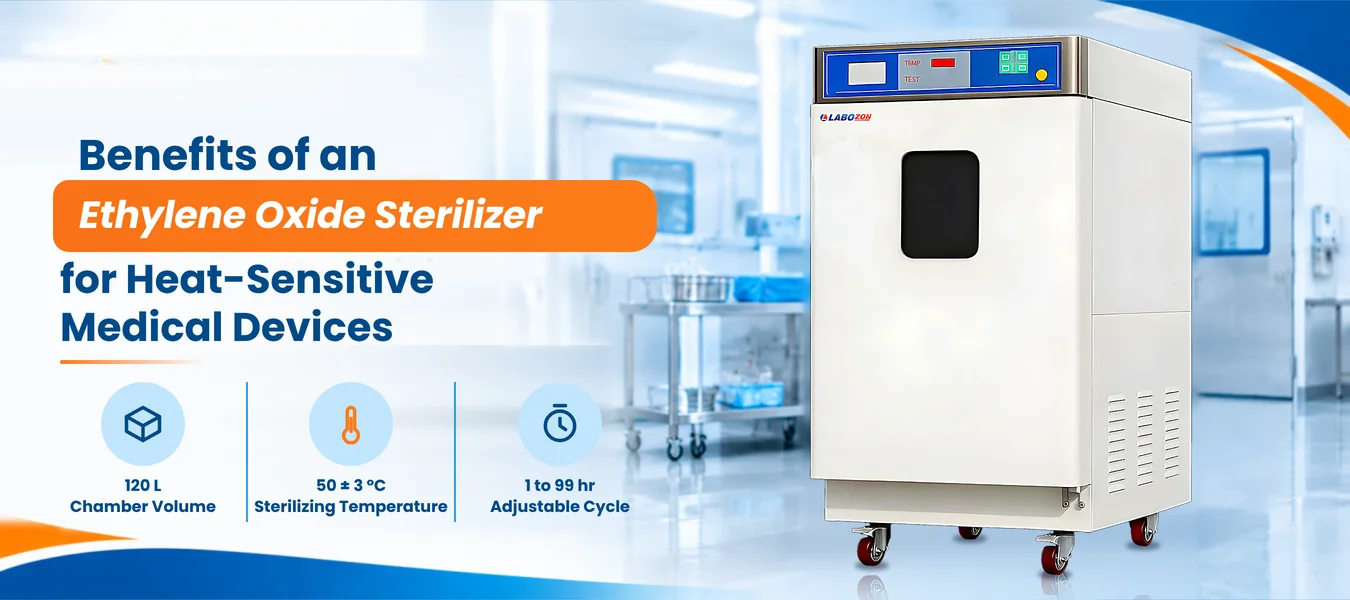
Steam works well for metal instruments, but it can warp plastics, damage electronics, and cloud optical parts. An ethylene oxide sterilizer offers a low-temperature alternative for sensitive devices. This guide covers how the process works, where it is used, what to compare, and the mistakes that cause problems.
How Low-Temperature Gas Treatment Works
Ethylene oxide sterilization, also called EO sterilization or ETO sterilization, uses ethylene oxide gas to treat items at low temperature. The gas can penetrate gas-permeable packaging and many device materials, provided the packaging and cycle settings have been validated, so wrapped items can be treated without steam exposure.
An ethylene oxide sterilizer machine controls temperature, humidity, gas exposure, and ventilation in a sealed chamber, so each cycle follows planned conditions. Wrapping and load compatibility must always follow the manufacturer's instructions and facility validation.
Main Parts and Cycle Phases
An ethylene oxide sterilizer diagram usually shows five parts: the chamber, the door with interlock, the gas supply, the heating and humidity control, and the ventilation line. Whether it is called an EO sterilizer or an ETO sterilizer machine, the cycle moves through vacuum, humidification, gas exposure, and ventilation phases.
The Ethylene Oxide Sterilizer LZ-EOS-A110 from Labozon adds electric uniform heating, PLC-based regulation, an LED display, and pulse vacuum ventilation to support controlled low-temperature treatment.
Why Heat-Sensitive Devices Need Gas Treatment
Low temperature
The LZ-EOS-A110 operates at 50 ± 3 °C, a range suited to many heat-sensitive plastics, electronic components, and optical items, subject to device compatibility and validated processing.
Humidity control
The product page states that humidity is maintained automatically, with a range of 45% to 75%.
Safety features
Double protective and safety interlocking doors, plus gas leak prevention, are listed for the unit.
Process records
The whole sterilization process is recorded for verification, and a built-in printer is listed, which makes batch filing simple.
Where the Process Is Applied
Ethylene oxide sterilization used for medical, pharmaceutical, laboratory research, optical, and food industry items is common because many of these materials cannot take heat or moisture. Typical work areas include:
- Reusable medical devices with plastic or electronic parts
- Optical instruments with delicate coatings
- Laboratory research items that cannot take heat or moisture
- Pharmaceutical packaging and related supplies
- Food industry items that need low-temperature treatment
Ethylene oxide sterilization equipment also supports documentation, since a printed cycle record is easy to file and review. One ethylene oxide gas sterilization machine can serve several departments when load plans are agreed in advance.
Published Details of the LZ-EOS-A110
| Parameter | Details |
|---|---|
| Type | Upright |
| Volume | 120 L |
| Internal dimensions | 600 × 400 × 500 mm |
| Sterilizing temperature | 50 ± 3 °C |
| Humidity level | 45% to 75% |
| Operating pressure | -60 kPa |
| Sterilization time | 1 to 99 hours, adjustable |
| Sterilization agent | EO gas |
| Regulation unit | PLC |
| Display | LED |
| Heating system | Electric uniform heating |
| Material | 304 stainless steel |
| Power supply | 110 to 220 V, 50 to 60 Hz |
Common Selection Mistakes
Choosing on chamber size alone is the most frequent error. Review temperature range, humidity control, cycle time range, door interlocks, ventilation design, and record keeping together. Comparing ethylene oxide sterilizer manufacturers should include safety features and documentation support, not size alone.
Other mistakes include ignoring the load types and daily volume, overlooking room ventilation needs, and skipping operator training. If a heat-tolerant load makes up most of the work, a unit from the wider laboratory autoclave range may suit that work better, so review both before deciding.
Low-Temperature Gas vs. Steam
| Factor | EO gas treatment | Steam treatment |
|---|---|---|
| Operating heat | Low temperature | High temperature |
| Plastics and electronics | Often suited, subject to validation | Can warp or damage parts |
| Moisture exposure | Controlled humidity phase | Direct steam contact |
| Post-cycle step | Ventilation before unloading | Drying before storage |
| Typical loads | Sensitive devices, optics, packaging | Metal instruments, glassware |
User Tips and Recommended Practices
- Train operators on gas handling, door locking, and emergency steps before the first cycle.
- Clean and dry items fully before loading, since moisture and residue can affect the cycle.
- Use packaging that allows gas to enter and leave, and leave space between packs.
- Do not overload the chamber, and follow your facility's loading plan.
- Check the door interlock and gas leak alarms before each cycle.
- Allow full ventilation before unloading, as your facility procedure describes.
- Keep the room ventilated, and follow your site's exposure monitoring rules.
- File the printed cycle record with each batch for traceability.
Explore the Laboratory Autoclave & Sterilizer Category
The Ethylene Oxide Sterilizer LZ-EOS-A110 belongs to a wider group of sterilizing equipment that includes steam autoclaves and low-temperature gas units. Buyers usually compare chamber volume, operating temperature, cycle control, door safety, and record keeping. To see the full range, browse the laboratory autoclave category.
Labozon supplies scientific equipment across many disciplines, and you can find the rest of its catalog from the Labozon home page.
Related Products


Looking for ethylene oxide sterilizer?
Compare available models, review product specifications, and contact the Labozon team for assistance in identifying equipment that matches your laboratory requirements.