
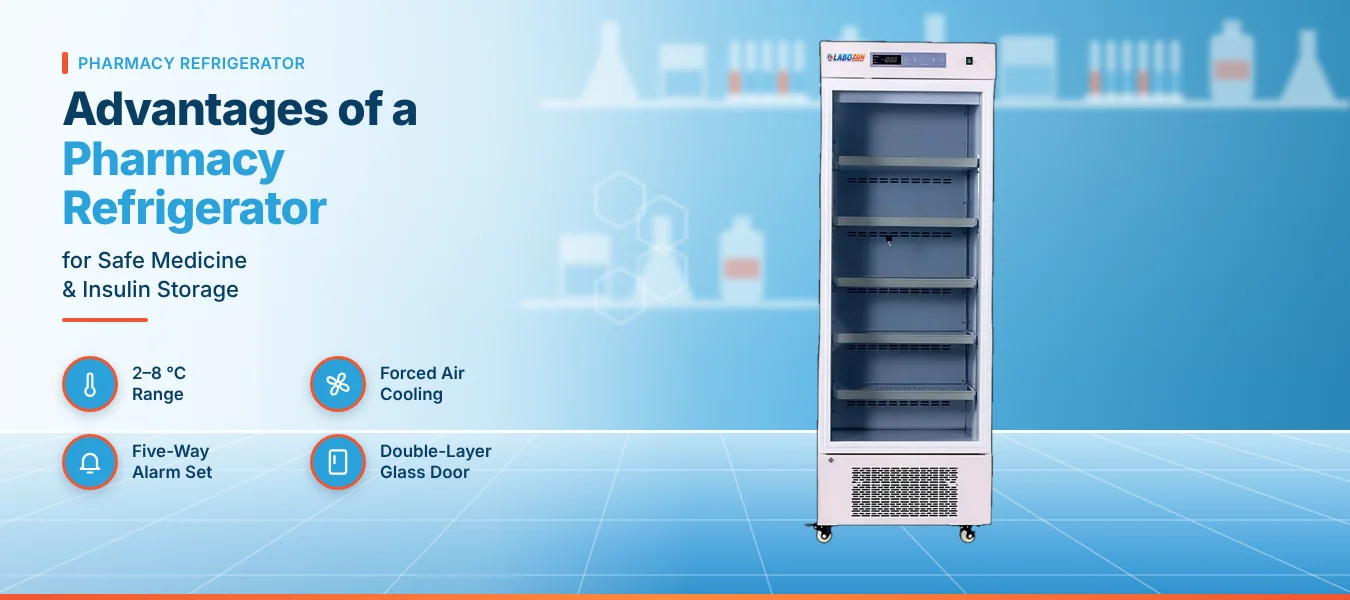
Insulin, vaccines and many injectable medicines lose strength when they drift outside their storage range. A kitchen fridge cannot hold that range well, because its temperature swings each time the door opens. A pharmacy refrigerator offers tighter control, even air flow and alarms that warn staff before stock is lost. This guide explains how it works, where it is used and what to review in the Labozon Pharmacy Refrigerator LZ-PR-B100.
What This Cabinet Does
A pharmacy refrigerator is a purpose-built cabinet that holds medicines and biological material between 2 and 8 degrees Celsius. Catalogs use several names for the same equipment, including pharmacy fridge, pharmaceutical fridge and pharmaceutical refrigerators.
It differs from a home unit in three ways: it controls temperature closely, it circulates air to keep the cabinet even, and it raises an alarm when something goes wrong.
Working Principle and Air Flow
Like a home unit, the cabinet uses a compressor, a condenser and an evaporator. A digital thermostat reads the temperature and switches the compressor to hold the set point.
A fan then moves cooled air through the cabinet, which is called forced air cooling. Automatic defrost prevents ice from building up on the evaporator during long periods of use.
Why Healthcare Teams Choose It
Stable Temperature
The set range holds even when the door opens often.
Even Air Flow
Fewer cold spots near the back and warm spots near the door.
Alarm Coverage
Staff are warned before stock is lost.
Clear Visibility
A glass door shows stock without opening the cabinet.
Pharmacy Refrigerator Use in Practice
Pharmacy refrigerator use covers dispensing pharmacies, hospital wards, clinics and research laboratories. The product page of the LZ-PR-B100 states that it stores medicines, vaccines, reagents and biomedical products in medical, hospital and clinical settings.
Many labs also treat it as a laboratory fridge for temperature-sensitive reagents, enzymes and sample kits. For insulin, place the cabinet close to the dispensing area so stock moves quickly from cabinet to patient.
Key Details of the LZ-PR-B100
The Labozon Pharmacy Refrigerator LZ-PR-B100 is a glass-door cabinet with forced air cooling. Its published details are below.
| Feature | Specification |
|---|---|
| Capacity | 360 L |
| Temperature range | 2 to 8 °C |
| Cooling and defrost | Forced air cooling, automatic defrost |
| Control and display | Digital thermostat, LED display |
| Refrigerant | R134a |
| Shelves | 5 |
| Door | Double-layer tempered glass, heated |
| Alarms | High and low temperature, sensor failure, power off, door open |
| Noise | 52 dB |
| External dimensions | 680 × 650 × 1975 mm |
| Weight | 105 kg |
| Optional accessory | USB (function not stated on the page) |
Access, Records and What to Confirm
A cabinet that holds high-value stock needs controlled access and clear records. The LZ-PR-B100 page lists a USB option without saying what it does, so ask the supplier whether it supports temperature records.
The page also omits the door lock, power, voltage and frequency, so confirm them before ordering. Keep a written temperature log as a backup to the digital display.
Home, Pharmacy and Laboratory Units Compared
The table below sets three cooling options side by side.
| Factor | Household Fridge | Pharmacy Unit | Laboratory Unit |
|---|---|---|---|
| Temperature control | Basic dial | Digital, narrow band | Digital, often adjustable |
| Air circulation | Passive | Forced air | Forced air |
| Alarms | None | Temperature, power, door | Temperature, power, door |
| Typical fit | Food | Medicines and insulin | Reagents and samples |
Selection Mistakes That Cause Rework
- Comparing units on capacity alone and ignoring shelf count and alarm coverage.
- Placing the cabinet in direct sun or without clearance for air flow.
- Overfilling shelves so air cannot move between packages.
- Overlooking floor space, ceiling height and doorway width for a 105 kg cabinet.
- Leaving the electrical supply unchecked against the site.
Teams that want to review similar cabinets can start with the laboratory refrigerator category before shortlisting.
User Tips and Recommended Practices
- Place the cabinet on a level floor with space around it for air flow.
- Let it reach its set range before loading medicines.
- Store insulin and medicines away from the back wall and the door.
- Do not overfill the shelves, so air can move between packages.
- Keep food and drink out of the cabinet.
- Open the door only as long as needed and close it fully.
- Check and record the display temperature at the start and end of each day.
- Test the alarms on a regular schedule.
- Clean the shelves and door seal on a regular schedule.
Exploring Wider Laboratory Refrigerator Options
The LZ-PR-B100 belongs to the laboratory refrigerator category, which covers pharmacy, blood bank, chromatography and general-purpose cabinets in several capacities. Buyers usually compare temperature range, capacity, air circulation, alarm coverage and door type.
The full Labozon laboratory refrigerator range shows these cabinets together, and the Labozon home page opens the other laboratory equipment groups.
See the full specification of the Pharmacy Refrigerator LZ-PR-B100.
Explore Pharmacy RefrigeratorRelated Products
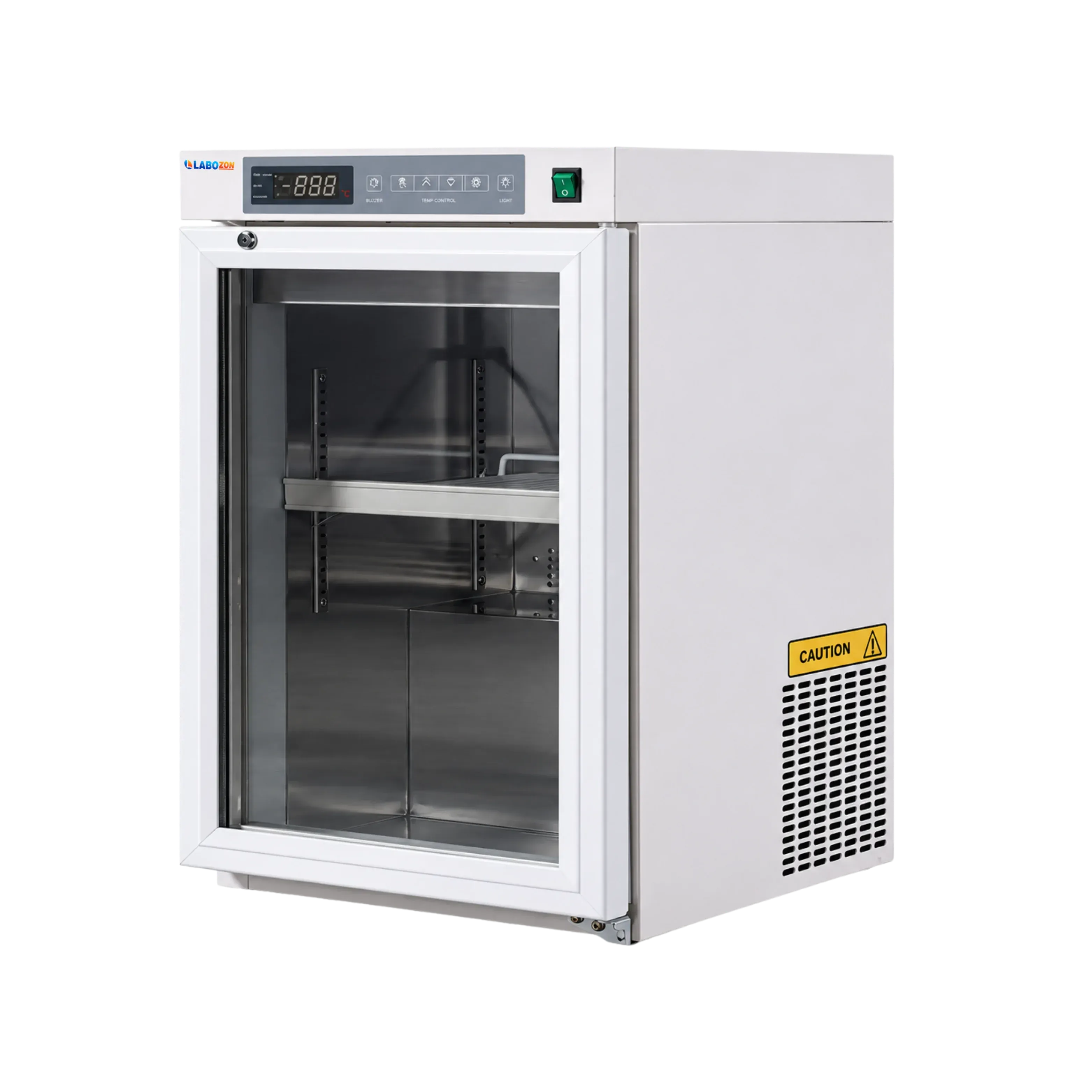


Looking for pharmacy refrigerator?
Compare available models, review product specifications, and contact the Labozon team for assistance in identifying equipment that matches your laboratory requirements.