
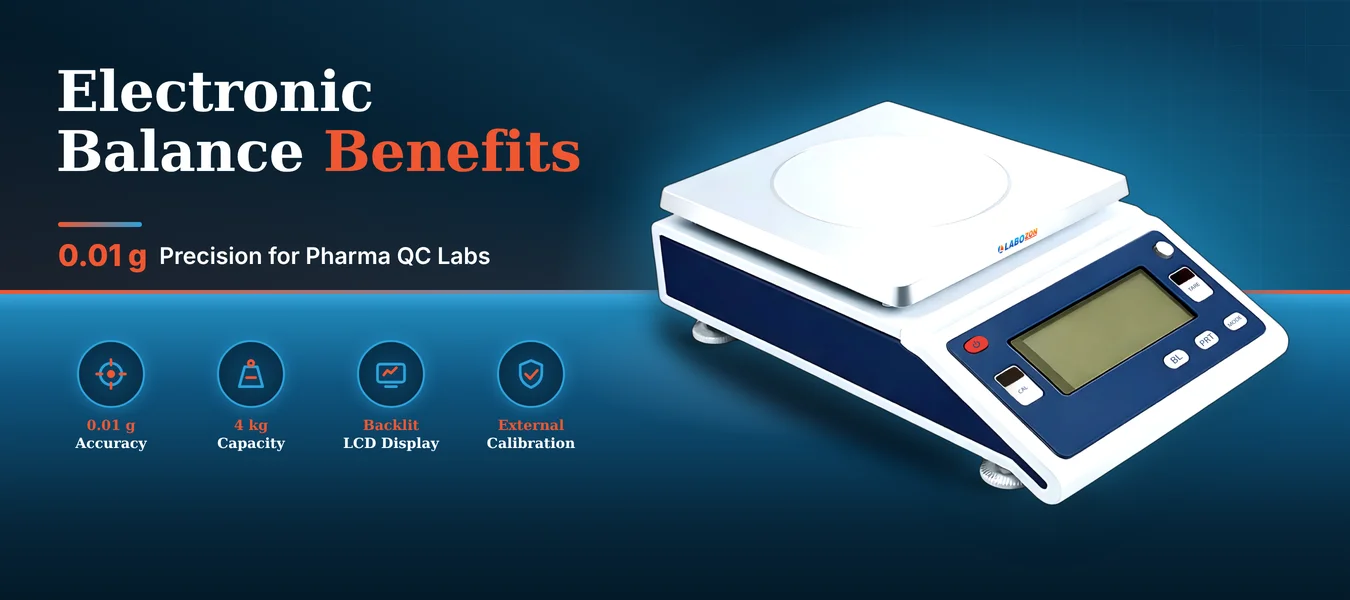
Weighing is the first measurable step in most quality control workflows, and the quality of that step shapes the results that follow. An electronic balance that reads to point zero one gram gives pharma teams a clear, repeatable way to handle gram-level tasks without slowing the bench. This guide covers how it works, where it fits, what to compare, and how to use it well, with the Labozon Electronic Balance LZ-EB-B120 as the working example.
- Laboratories
- Hospital Labs
- Research Centers
- Advanced Labs
What Point Zero One Gram Detail Means at the Bench
A reading step of point zero one gram equals one hundredth of a gram, or ten milligrams. For gram-level QC tasks such as checking received materials, reagent containers, and packaging samples, that level of detail separates real differences from noise while keeping the bench moving. A well-set electronic balance also keeps records consistent from one analyst to the next.
The product page for the LZ-EB-B120 lists accuracy of point zero one gram, repeatability below point zero one gram, and a capacity of four kilograms. Compared with basic electronic scales made for general weighing, a laboratory instrument adds a dedicated calibration method, tare control, and stabilization behavior that analysts can check and record.
How the Weighing Chain Works
An electronic balance machine converts the force of a load into a mass reading through an electromagnetic measuring unit. The electronic balance diagram below follows the signal from sample to screen.
Simplified signal path of an electronic balance weight machine
Once the pan is loaded, the measuring unit reports the force, and the built-in functions shape what the analyst sees. Tare removes a container, zero tracking holds the resting display steady, and the counting and percentage modes reuse the same reading for different jobs. The display can show grams, grains, kilograms, carats, ounces, or pounds, which suits records written in mixed units. An electronic balance analytical model follows the same weighing chain but is built for finer reading detail and lighter loads.
Practical Use Cases in Pharma QC Labs
The product page describes use in quality control, research, and production processes that need fast, accurate, and user-friendly mass measurement. In practice, electronic balance uses in laboratory work cover a wide spread of small jobs that add up across a shift. A single lab balance often covers several of these jobs, which is why electronic balance use is so common in QC work.
Reagent and Buffer Preparation
Weigh ingredients before mixing, a routine part of electronic balance chemistry work.
Incoming Material Checks
Confirm the mass of bulk materials and containers received for testing.
Filled Container Verification
Compare filled container weights with a reference value on the bench.
Counting by Weight
Use the counting function to tally identical small items quickly.
Percentage Comparison
Check a sample against a known reference mass in a single view.
Research Bench Weighing
Support method development and small studies that need quick mass readings.
Benefits That Show Up During Routine Work
Specifications matter most when they change how a shift feels. These are the features of the LZ-EB-B120 that analysts notice first.
Readable Backlit Display
Dual text prompts let an analyst confirm the mode and the value at a glance.
Quick Stabilization
Less waiting between placing a sample and recording the result.
Durable Pan and Feet
A stainless steel pan wipes clean, and non-corrosive feet keep the unit steady.
Overload Protection
A safeguard when a heavy item lands on the pan by mistake.
External Calibration
Allows verification and adjustment of weight with a check weight.
Low Power Indicator
An early prompt before the unit runs short during a busy session.
Common Selection Mistakes to Avoid
Choosing reading detail beyond the task
Finer detail is not always better for gram-level work. It can slow routine weighing, so match the reading step to the smallest difference that matters. A gram-level electronic balance suits bulk checks, while milligram tasks belong on an analytical model.
Overlooking capacity against the heaviest load
Check the largest container or sample the bench will see, then keep it within the stated capacity of four kilograms for this model.
Ignoring pan size
A pan measuring two hundred by two hundred millimeters should comfortably hold your usual weighing boats and containers.
Skipping the calibration method
External calibration needs a suitable check weight and a written schedule. Confirm the lab can support both before choosing.
Comparing headline numbers only
Repeatability, display clarity, tare behavior, and unit options affect daily use as much as capacity does. Viewing the full laboratory balance range side by side makes these differences easier to spot.
Choosing Between Balance Types
Balances are grouped by reading detail and load range. This overview shows where a gram-level electronic balance sits among its neighbors.
| Balance Type | Reading Detail | Load Range | Typical QC Task |
|---|---|---|---|
| Electronic balance | Gram level | Moderate to high | Bulk materials, reagent containers, packaging samples |
| Analytical balance | Milligram or finer | Lower | Small sample weighing where fine detail is required |
| Semi-micro balance | Finer than analytical | Lowest | Very small quantities |
| Floor balance | Coarser | Very high | Large drums and heavy containers |
User Tips for Steady Readings
- Place the electronic balance on a firm bench away from drafts, vibration, and direct heat.
- Tare the empty container first, then add material so only the sample mass is shown.
- Record the value only after the display has settled.
- Run external calibration with a suitable check weight on a written schedule and log each check.
- Keep loads within four kilograms even though overload protection is present.
- Keep the electronic balance clean: wipe the stainless steel pan with a soft cloth after each task and clear spilled powder at once.
- Let samples reach bench temperature before weighing to avoid drifting readings.
- Select the unit named in the written procedure before starting each task.
Exploring the Laboratory Balance Category
The LZ-EB-B120 belongs to the wider laboratory balance category, which brings together analytical, semi-micro, beam, electronic, floor, and precision balances for different weighing jobs. Laboratories typically compare capacity, readability, repeatability, linearity, pan size, and display when evaluating options in this group. You can explore the full range of laboratory balances to compare these attributes across models. Within the electronic balance group, each electronic balance scale lists capacity, readability, repeatability, pan size, and display.
For a broader view of instruments used in testing and research, the Labozon home page lists the complete set of lab equipment categories.
Name: Olivia Carter – Labozon
Specialty: Laboratory Equipment, Scientific Technology, and SEO Content Writing
Writing Style: Professional, informative, research-driven, and reader-friendly.
Bio: Olivia Carter is a content writer at Labozon, specializing in laboratory equipment, scientific technologies, and laboratory applications. She creates informative, SEO-focused blog articles that highlight product features, explain key benefits, and explore the practical uses of scientific instruments. Her goal is to present technical information in a clear, accurate, and accessible manner, helping laboratory professionals, researchers, and science enthusiasts make informed decisions.
See the Full Specifications
Review capacity, pan size, display, and features for this electronic balance and see how it fits your bench.
Explore Electronic Balance LZ-EB-B120Related Products


Looking for electronic balance?
Compare available models, review product specifications, and contact the Labozon team for assistance in identifying equipment that matches your laboratory requirements.