
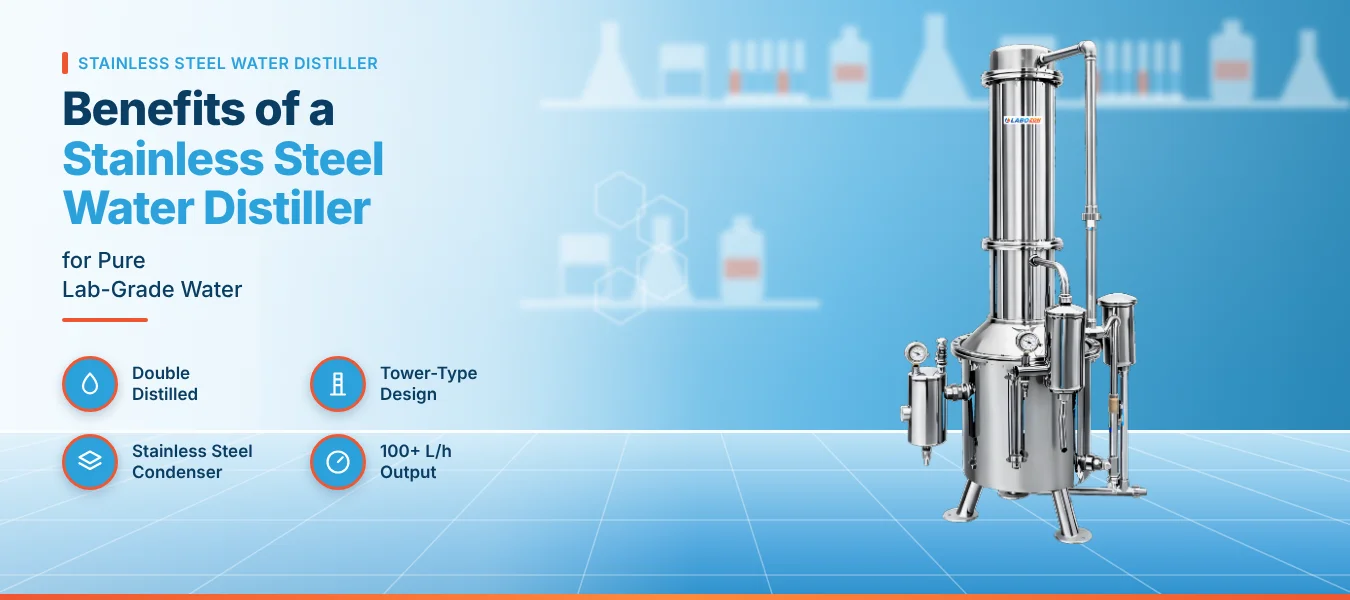
Dissolved salts, organic traces and microbes in tap water can ruin a buffer, cloud a titration or shift a baseline. A stainless steel water distiller removes most of these contaminants by boiling water and collecting only the condensed steam. This guide explains how it works, where it is used and what to review in the Labozon Stainless Steel Water Distiller LZ-SWD-B100.
What the Equipment Does
A stainless steel distiller is a still that converts feed water into steam and then back into liquid. Salts, minerals and most non-volatile impurities stay behind in the boiler, and the condensed liquid is the distilled water labs use for reagents, rinsing and dilution.
Catalogs describe the same equipment in many ways, including stainless distiller, water distiller and distilled water machine. A stainless steel water distiller machine sized for laboratory use produces far more water per hour than a benchtop glass still.
Working Principle and Layout
The process has three stages. A heating source brings feed water to a boil, the steam rises through a separator that holds back droplets, and a condenser cools the steam back to liquid.
In a tower-type design the condenser and pipes sit in a vertical frame, which saves floor space and improves heat transfer. The cooling loop removes heat from the steam, so its supply pressure affects how steadily the condenser works.
Practical Advantages
Purity
Dissolved solids stay behind in the boiler.
Durability
Stainless steel resists hot water and steam.
Volume
One point can feed several labs.
Cleanability
Smooth metal surfaces are easier to descale.
Typical Laboratory Uses
Common uses include preparing reagents and media, rinsing glassware, feeding autoclaves and humidifiers, diluting samples and supplying other instruments.
The product page names pharmaceutical and health work, chemical work, scientific research institutions and laboratories, and its applications section adds scientific and medical laboratories.
Key Details of the LZ-SWD-B100
The Labozon Stainless Steel Water Distiller LZ-SWD-B100 is a tower-type unit with stainless steel pipes and condenser. Its published details are below.
| Feature | Specification |
|---|---|
| Output | At least 100 L per hour |
| Configuration | Double distilled, tower type |
| Material | Stainless steel, including pipes and condenser |
| Steam supply pressure | Up to 0.4 MPa |
| Cooling water pressure | Up to 0.2 MPa |
| Steam consumption | About 1:1 (as listed) |
| Water consumption | 1:14 or less (as listed) |
| Packing dimensions | 770 × 720 × 1650 mm |
| Weight | 87 kg (as listed) |
What to Confirm Before Ordering
The page mentions both an electric steam heating tube and steam from a boiler, so confirm with the supplier how the unit is heated and what steam supply it needs.
Ask also about power rating, voltage, cooling water flow, storage tank capacity and purity figures, since the page does not list them. A distiller that fits the building services installs faster and runs more smoothly.
Distillation, Reverse Osmosis and Deionization Compared
The table below sets three water treatment methods side by side.
| Factor | Distillation | Reverse Osmosis | Deionization |
|---|---|---|---|
| Main action | Boils and condenses water | Pushes water through a membrane | Exchanges ions on resin |
| Removes | Salts, most organics, microbes | Most salts and particles | Ions only |
| Energy use | Higher | Lower | Low |
| Maintenance | Descaling | Membrane changes | Resin changes |
Selection Mistakes That Cause Rework
- Comparing units on output alone and ignoring steam supply and cooling water.
- Overlooking floor space, ceiling height and drain access.
- Ignoring storage for the distilled water produced.
- Forgetting hours of daily operation when sizing output.
- Asking Stainless steel water distiller manufacturers for different figures, which makes offers hard to compare.
Teams that want to review similar units side by side can start with the water distiller category before shortlisting.
User Tips and Recommended Practices
- Use a clean, softened feed to slow scale build-up.
- Check the cooling water supply before each start.
- Let the unit reach steady operation before collecting water.
- Discard the first volume of distillate after a long idle period.
- Store distilled water in clean, covered containers and label the date.
- Descale the boiler and condenser on a regular schedule.
- Keep the area around the unit dry and clear.
- Never run the unit without feed water.
- Log operating hours, descaling dates and any fault.
Exploring Wider Water Distiller Options
The LZ-SWD-B100 belongs to the water distiller category, which covers glass, stainless steel and automatic units in different output sizes. Buyers usually compare output per hour, heating method, material, cooling water use and ease of cleaning.
The full Labozon water distiller range shows these units together, and the Labozon home page opens the other laboratory equipment groups.
See the full specification of the Stainless Steel Water Distiller LZ-SWD-B100.
Explore Stainless Steel Water DistillerRelated Products
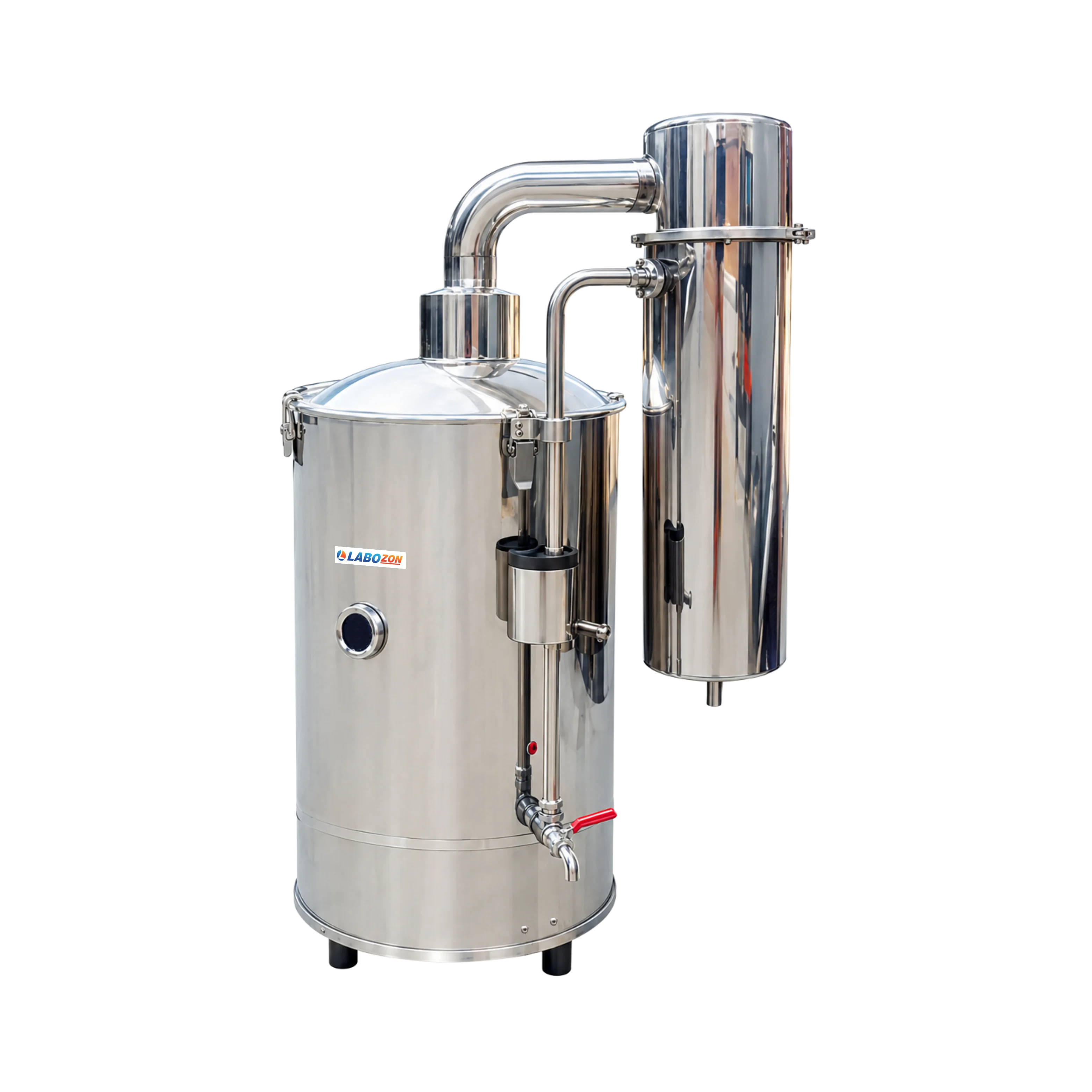
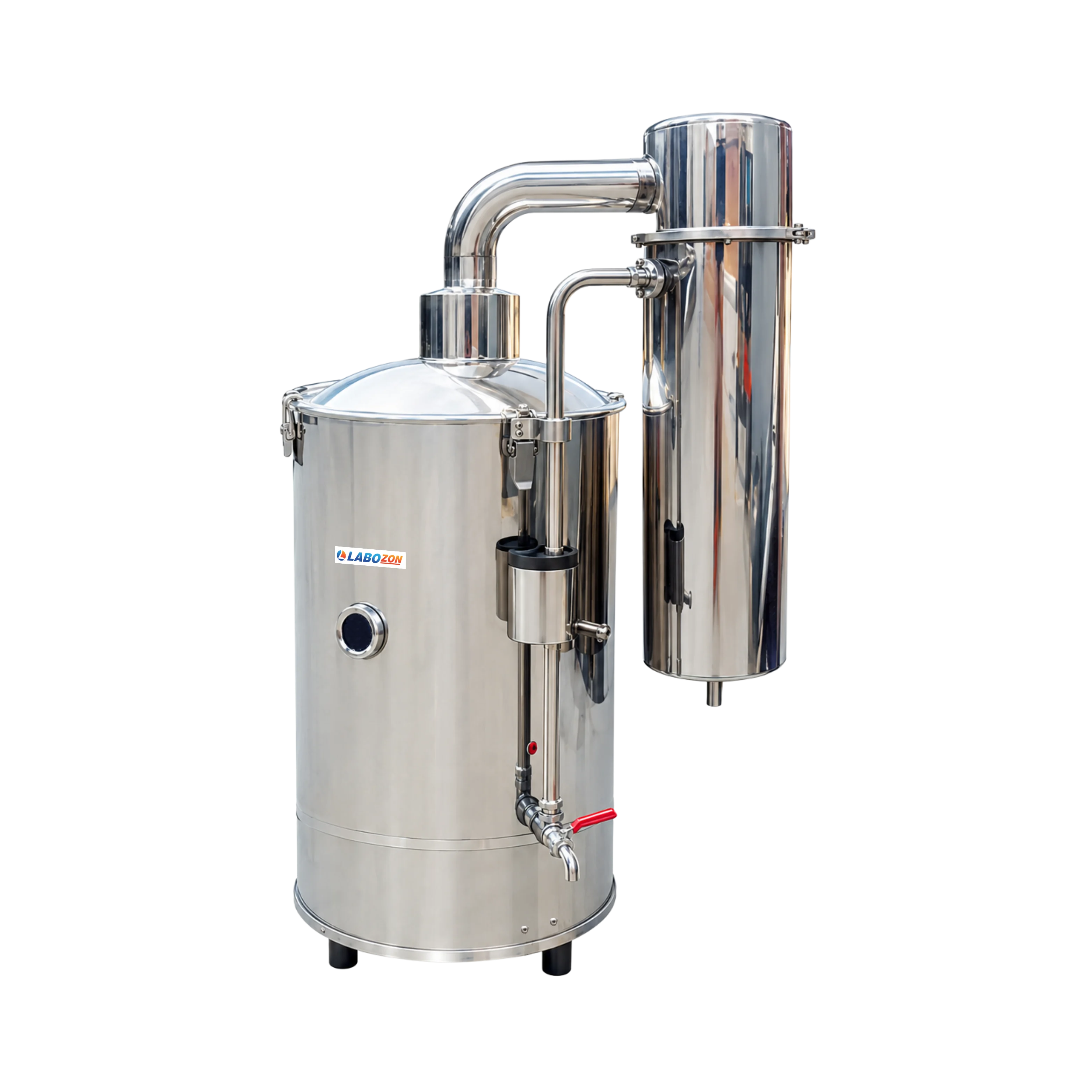
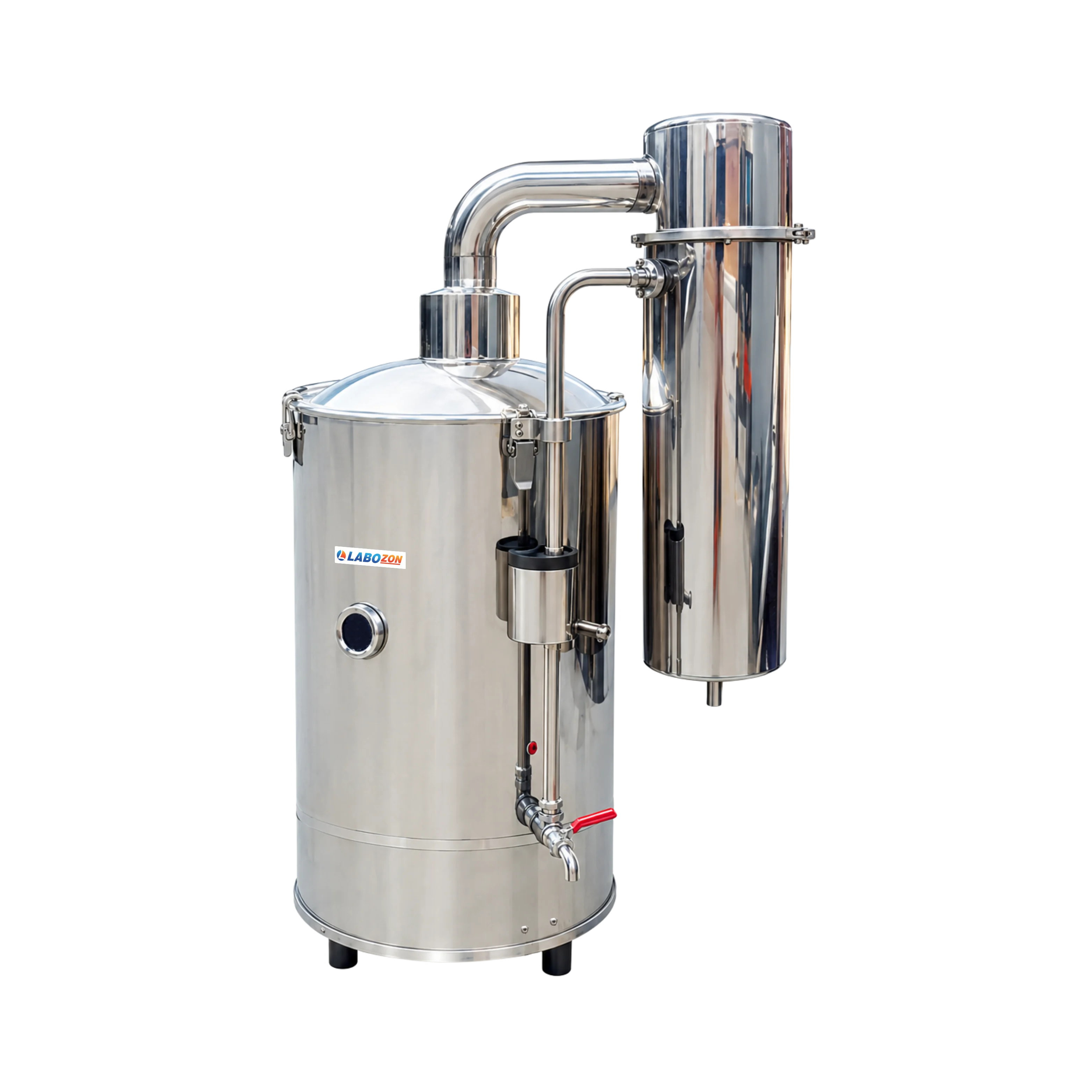


Looking for stainless steel water distiller?
Compare available models, review product specifications, and contact the Labozon team for assistance in identifying equipment that matches your laboratory requirements.