
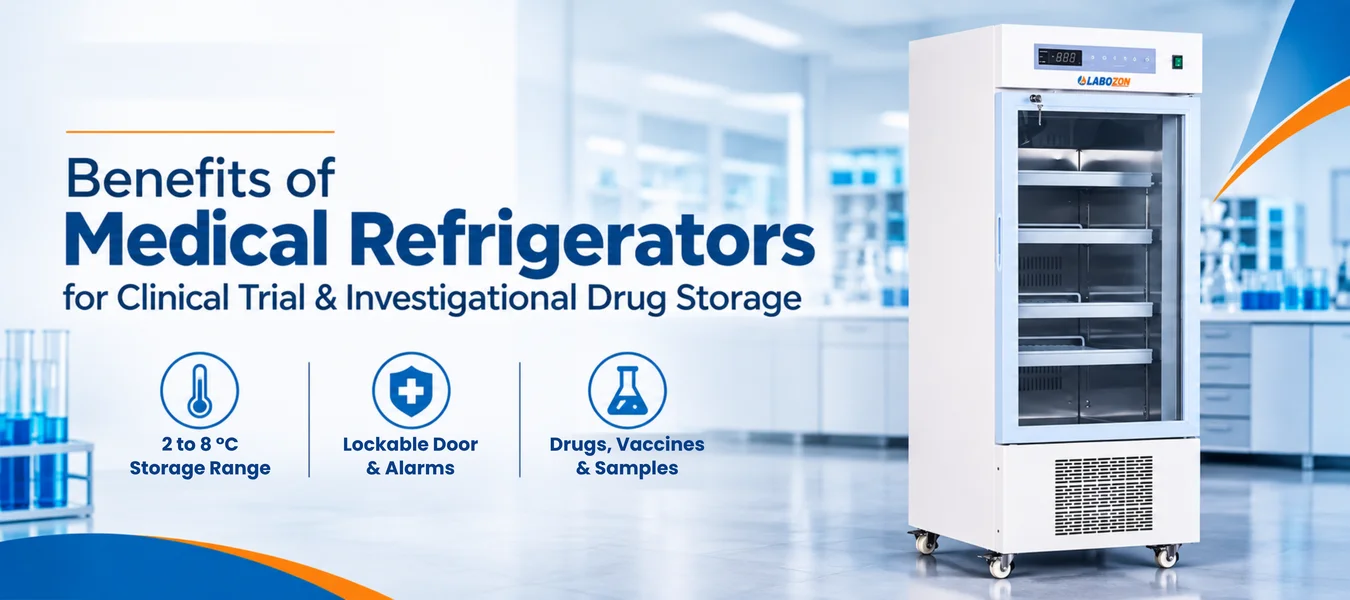
Investigational drugs, vaccines, and biological samples lose value fast when storage temperature drifts. A Medical Refrigerator keeps contents inside a defined cold range and warns staff when something goes wrong. This guide explains how it works, where it fits, and what to review before choosing one.
How a Medical Refrigerator Holds a Defined Range
A medical refrigerator uses a compressor, a refrigerant, and a controller working together. In the Medical Refrigerator LZ-MR-A220, a sensor reads cabinet temperature, and a microprocessor controller switches cooling on and off to hold the setpoint between 2 and 8 °C. The page lists air cooling, described in its introduction as forced-air cooling, with automatic defrost and R134a refrigerant.
The page lists no uniformity or fluctuation figures, so confirm performance with Labozon if your protocol sets strict limits.
Medical Refrigerator Diagram: Main Parts
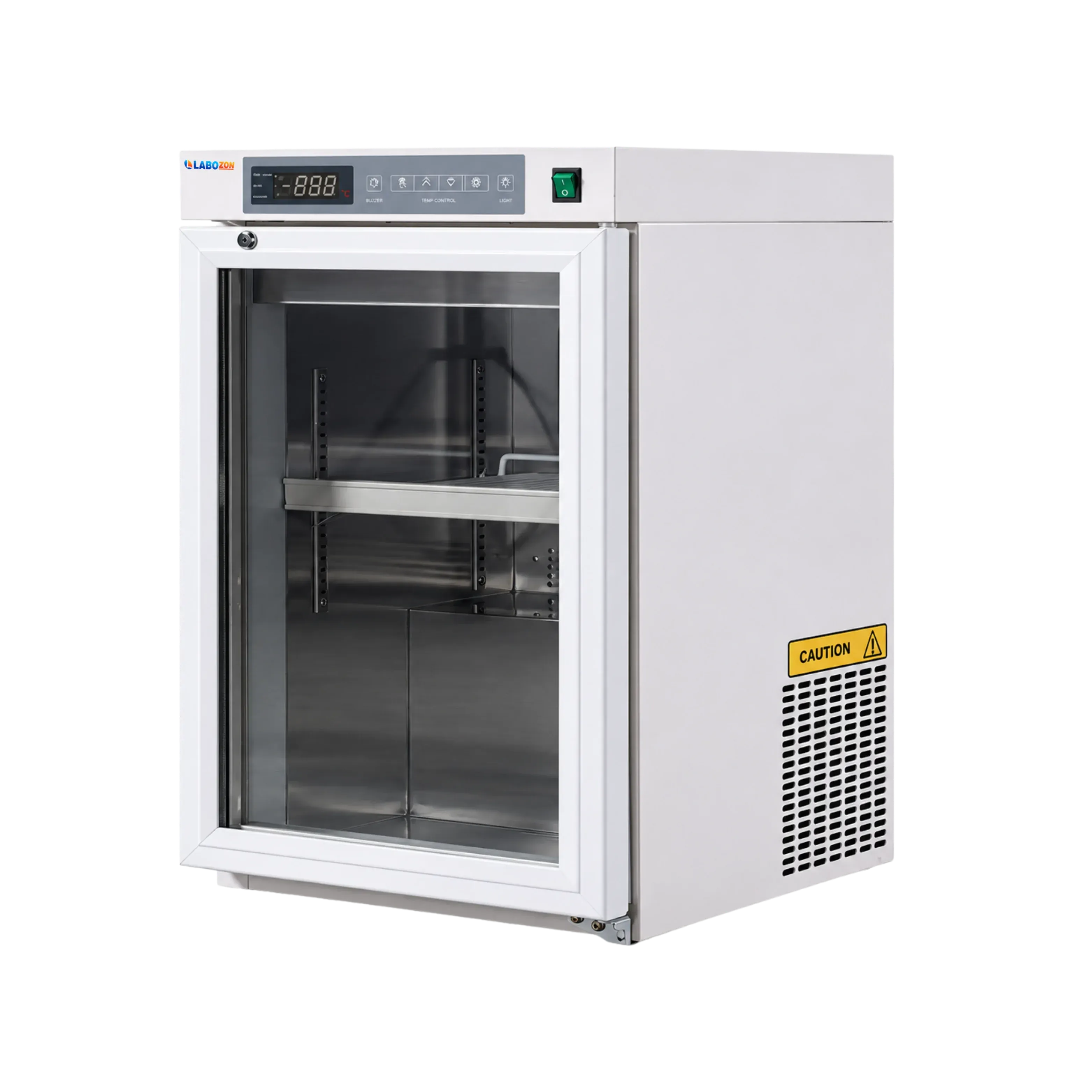
A simple diagram of the LZ-MR-A220 shows how its parts support controlled storage.
- Controller: microprocessor-based, with a large digital LCD showing temperature to 0.1 °C
- Door: front-opening with a key lock; the page introduction also describes a heated double-layer glass door that limits condensation
- Interior: four shelves with LED lighting
- Cooling unit: air cooling with automatic defrost
- Casters: for repositioning
Medical Refrigerator Uses Across Healthcare and Research
Medical refrigerator uses reach well beyond trials. According to the product page, the LZ-MR-A220 stores liquid and solid drugs, vaccines, biological specimens, and samples in laboratories, research centers, hospitals, and clinics.
A vaccine refrigerator in a clinic, a pharmacy refrigerator in a dispensary, and a pharmaceutical refrigerator in a research lab share the same job: steady cold with visible control. A medical fridge on a research ward follows the same logic, a pharmacy fridge also helps hospital pharmacies hold sealed stock, and a medicine fridge suits smaller practices. In each case, a refrigerator for medical use adds alarms and access control that general-purpose units may lack.
Clinical Trial and Investigational Drug Storage Needs
Trial teams store investigational products under protocol-defined conditions, and any excursion can affect data and supplies. Three general needs follow: holding the required range, limiting access, and signaling problems early. The page does not mention clinical trials, so each site should confirm protocol requirements with its sponsor and quality team.
The LZ-MR-A220 lists a defined 2 to 8 °C range, a key lock, and alarms for high and low temperature, sensor failure, power off, and door open. The page lists no data logger or battery backup, so sites should add independent monitoring and a power-loss plan as their protocols require.
Published Details of the LZ-MR-A220
| Parameter | Details |
|---|---|
| Capacity | 130 L |
| Cabinet type | Upright |
| Temperature range | 2 to 8 °C |
| Controller and display | Microprocessor, digital display |
| Cooling and defrost | Air cooling, automatic defrost |
| Refrigerant | R134a |
| Door | Key lock |
| Alarms | High and low temperature, sensor failure, power off, door open |
| Shelves and lighting | 4 shelves, LED lighting |
| Mobility | Casters |
| Power | 240 W |
| Internal dimensions | 432×500×843 mm |
| Footprint | 522×595 mm |
| Weight | 60 kg net, 85 kg gross |
Household Units Versus Controlled Medical Storage
General-purpose household refrigerators are not designed for controlled medical storage and may not provide the same temperature monitoring or alarms. The table summarizes typical differences.
| Feature | Household refrigerator | Medical refrigerator |
|---|---|---|
| Temperature range | Broad, user adjusted | Defined range such as 2 to 8 °C |
| Alarms | Often none | Temperature, sensor, power, and door alarms on this model |
| Access control | Usually none | Key lock |
| Display | Dial or none | Digital readout |
This summary is general; features vary by model.
Step-by-Step Setup and Use
- Place the unit on a level floor with room around it for airflow.
- Connect it to a suitable outlet and allow it to reach 2 to 8 °C before loading.
- Check the display and confirm the setpoint.
- Load products on the shelves, leaving gaps for air movement.
- Lock the door and keep the key with authorized staff.
- Record the temperature at set times.
- Respond to any alarm right away and note the event.
- Clean the interior regularly.
Review the user manual before first use.
Common Selection Mistakes
A frequent mistake is choosing by capacity alone. Review temperature range, alarms, door lock, cooling method, defrost mode, shelf count, and footprint together. When comparing medical refrigerator manufacturers, ask about alarm options, spare parts, and technical documentation. To weigh other formats, browse the laboratory refrigerator range before narrowing your shortlist.
Another mistake is ignoring space and weight. At 60 kg net, this unit needs a level floor, and its casters should be locked so it cannot roll.
User Tips and Recommended Practices
- Let a new unit reach the target range before loading.
- Do not overload; leave space so air moves between items.
- Limit door openings, since each opening lets warm air in.
- Keep a daily log of temperatures, alarms, and actions.
- Add independent monitoring if your protocol requires it, since the page lists no data logger.
- Test alarms on a schedule.
- Plan where products move if power fails.
- Label shelves by study or product type.
- Review the manual and your sponsor’s storage requirements.
Exploring the Laboratory Refrigerator Category
The Medical Refrigerator LZ-MR-A220 belongs to the wider group of laboratory refrigerators, which includes pharmacy and vaccine units, upright and under-counter cabinets, and specialist cold storage. Buyers usually compare capacity, temperature range, alarms, door type, cooling method, and footprint. To see the full range, visit the laboratory refrigerators category.
Labozon supplies scientific equipment across many disciplines, and the rest of its catalog is reachable from the Labozon home page.
Related Products


Looking for medical refrigerator?
Compare available models, review product specifications, and contact the Labozon team for assistance in identifying equipment that matches your laboratory requirements.